The International Rescue Committee (IRC) has launched an emergency response to the deadly Ebola outbreak in Central Africa.
The rare strain of the virus,which has no vaccine,has killed 88 people across the Democratic Republic of Congo (DRC) and Uganda.
Yesterday,the World Health Organisation (WHO) declared a global emergency over the outbreak.
Authorities have confirmed the current outbreak is caused by the Bundibugyo strain. It currently has no licensed vaccine or treatment.
The IRC says the spread could accelerate due to insecurity,displacement,fragile health systems,and high levels of population movement across the region if containment if not ramped up.
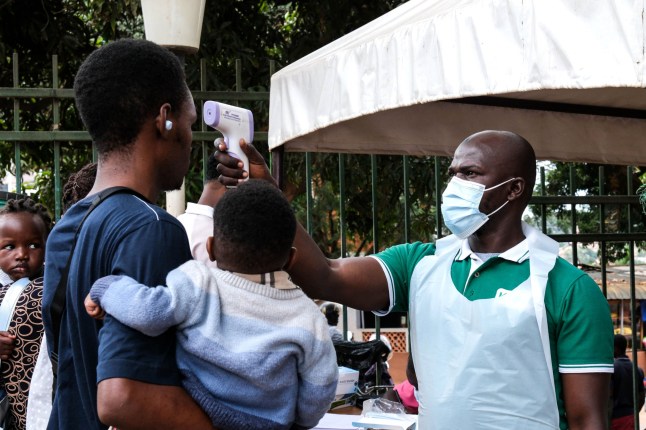
A health worker uses a thermometer to screen people in front of Kibuli Muslim Hospital in Kampala,Uganda,Saturday,May 16,2026 (Picture: AP Photo/Hajarah Nalwadda)
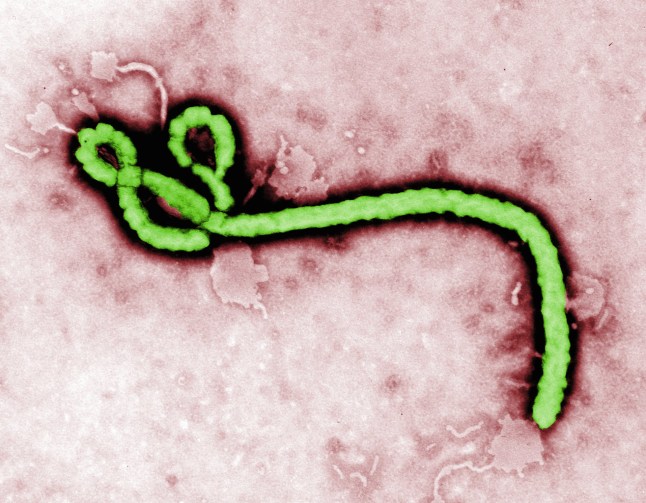 A close up of the Ebola virus.The Bundibugyo has no vaccine (Picture:: Getty Images/Image Source)‘The IRC has extensive experience responding to Ebola outbreaks,and our teams know that rapid action on infection prevention and control,community engagement,safe isolation,and support to frontline health workers is critical to preventing further spread. ‘In response to the current escalating outbreak,whilst working in close coordination with the government health authorities who are leading the response,IRC is immediately launching emergency prevention and control activities including distribution of Personal Protective Equipment (PPE).’The outbreak was announced by the Africa Centres for Disease Control and Prevention on Friday. However,it is not clear when it had begun.In a statement released by WHO on Sunday,it said there are ‘significant uncertainties’ over the true number of infected people or its geographical spread.It added: ‘The event requires international coordination and cooperation to understand the extent of the outbreak,to coordinate surveillance,prevention and response efforts,to scale up and strengthen operations and ensure ability to implement control measures.’According to the European Centre of Disease Prevention and Control,the likelihood of infection for people in Europe is considered very low.
